

Buddy seat
- Thread starter landcruiser
- Start date
You are using an out of date browser. It may not display this or other websites correctly.
You should upgrade or use an alternative browser.
You should upgrade or use an alternative browser.


To be fair, it was a different horse. I think Jack uses 'MyMare' for anything where he needs an absolutely trustwothy horse. It was little Cajun, the baby horse, who went through a major bucking phase. The pictures showed a very short-backed youngster, with a great big western saddle on, and clear daylight under the back. I have a lot of respect for Jack, but for knowledge of saddle fitting, and horses' backs - I'd look elsewhere.
Please Kate, tell me more about "Little Cajun, the baby horse, the major bucking phase, the short backed youngster with that great big old saddle on". I have a lot of pictures of Cajun. Maybe I could find it for you to reference. Was I riding him? Was there a back cinch?
And then tell me when, how, or what you could possibly know about how I use "MyMare".
Then tell me how any of it relates to a child in a "buddy seat".

Keep on, keepin on
Jack

that picture is bloody hilarious, made my day- thank you for taking the time to make it 
on a serious note
anyone who cannot acknowlege the fact that 'the buddy seat' is gonna be bad is being deliberately difficult- anyone with half a brain cell can see that it will cause pressure on the loins, not to mention the fact your risking your own child.
me thinks they got the idea from push bikes with a seat on the back for your dolly
on a serious note
anyone who cannot acknowlege the fact that 'the buddy seat' is gonna be bad is being deliberately difficult- anyone with half a brain cell can see that it will cause pressure on the loins, not to mention the fact your risking your own child.
me thinks they got the idea from push bikes with a seat on the back for your dolly

But what you are all forgetting is that people would obviously only use these buddy saddles on Majikal horses who would never buck or bolt, or put them or their child in a dangerous situation. Clearly you are all idiots for not realising this

well - you used to talk a lot about Cajun and his bucking ! I'm surprised that you've forgotten. And you used to regularly talk about 'your mare' ! She's called Rosie, same as my mare, isn't she ? I don't know, obviously, I was just trying to make it clear to the other poster, that you'd be very unlikely to put a small child on the back of a horse who had known bucking problems, when you had much more suitable horses to choose from !


First there is no ambiguity as to how well a saddle distributes weight be that treed or not, the technology is available for us to see this in real time, even if it’s not cheap, when I looked at it a couple of years ago it was around £2000 iirc and that was the basic system not the one with twice the number of sensor or the software upgrade for extra functionality.
If you look at the three parts you split it into for a treed saddle, jumping, GP, Dressage.(Obviously there are other saddle designs)
First of all when you are talking about active forces created by the rider you can’t actively adapt the saddle in real time for the riders movement or riding style, so in the top layer of your three tier model you can’t really do much about the forces transferred into the next level be they active or static other than use a material that can absorbs some of the forces and this will only be for active forces.
The middle tier needs to be rigid enough to distribute the weight as evenly as possible across the surface area of the saddle in contact with the horse whilst also being flexible enough to assist the bottom layer (the part of the saddle that is in contact with the horse) with staying in contact with the horses moving back.
This type of saddle design has not changed much at all, other than change of tree material in recent times as far as i'm aware perhaps Wally could comment?
All the other things people are trying/making are to make the saddle easier to fit/adjust to more horses or simpler to change so it can be done at home.
None of these saddles distribute the pressure any better though with the exception of the wow system which is a completely different design although very similar in concept to the Universal Pattern saddle in concept.
If that makes any sense
I guess the point I disagree with you about is “it's is not a simple problem, like for example, the problem of distributing weight across a flat, rigid surface, such as you might see in an O level physics class”
It’s exactly the same except it changes constantly (which can be monitored in real time 40-50 times a second) and instead of just having one value you have a number of values within a range and it’s the range that you are talking about not just one value as you would if the forces were static.
Haven’t got time or the inclination to go into the material properties in gel pads and some of the treeless saddles at the moment but the point is they can be proven how well they work or don’t.
But the bottom line is if you have materials with fantastic properties, if you add a well designed tree that complements the materials properties it makes an even better saddle for weight distribution than a treeless saddle using the same materials.
Those people who can tell what forces will be put into the exo-muscular system of the horse if it has a small child on it’s back while it goes for a little walk and say they are more than those going through the same exo-muscular system of a horse doing a 5 star event are pretty impressive, I guess compared to them everyone has half a brain cell.
As to it not being safe, I guess that means all the people who fall of horses or have them run off with them shouldn’t get on them either as it’s not safe for THEM.
I don’t think you can assume that every horse is dangerous and if we can’t trust people to have enough common sense to make a judgement call as to the risk involved, horse, location, task etc we may as well all give up now.
If it was not for children I would encourage anyone who is too stupid to make a risk assessment of anything they do to try it, get them out of the gene pool.
If you look at the three parts you split it into for a treed saddle, jumping, GP, Dressage.(Obviously there are other saddle designs)
First of all when you are talking about active forces created by the rider you can’t actively adapt the saddle in real time for the riders movement or riding style, so in the top layer of your three tier model you can’t really do much about the forces transferred into the next level be they active or static other than use a material that can absorbs some of the forces and this will only be for active forces.
The middle tier needs to be rigid enough to distribute the weight as evenly as possible across the surface area of the saddle in contact with the horse whilst also being flexible enough to assist the bottom layer (the part of the saddle that is in contact with the horse) with staying in contact with the horses moving back.
This type of saddle design has not changed much at all, other than change of tree material in recent times as far as i'm aware perhaps Wally could comment?
All the other things people are trying/making are to make the saddle easier to fit/adjust to more horses or simpler to change so it can be done at home.
None of these saddles distribute the pressure any better though with the exception of the wow system which is a completely different design although very similar in concept to the Universal Pattern saddle in concept.
If that makes any sense
I guess the point I disagree with you about is “it's is not a simple problem, like for example, the problem of distributing weight across a flat, rigid surface, such as you might see in an O level physics class”
It’s exactly the same except it changes constantly (which can be monitored in real time 40-50 times a second) and instead of just having one value you have a number of values within a range and it’s the range that you are talking about not just one value as you would if the forces were static.
Haven’t got time or the inclination to go into the material properties in gel pads and some of the treeless saddles at the moment but the point is they can be proven how well they work or don’t.
But the bottom line is if you have materials with fantastic properties, if you add a well designed tree that complements the materials properties it makes an even better saddle for weight distribution than a treeless saddle using the same materials.
Those people who can tell what forces will be put into the exo-muscular system of the horse if it has a small child on it’s back while it goes for a little walk and say they are more than those going through the same exo-muscular system of a horse doing a 5 star event are pretty impressive, I guess compared to them everyone has half a brain cell.
As to it not being safe, I guess that means all the people who fall of horses or have them run off with them shouldn’t get on them either as it’s not safe for THEM.
I don’t think you can assume that every horse is dangerous and if we can’t trust people to have enough common sense to make a judgement call as to the risk involved, horse, location, task etc we may as well all give up now.
If it was not for children I would encourage anyone who is too stupid to make a risk assessment of anything they do to try it, get them out of the gene pool.
As to it not being safe, I guess that means all the people who fall of horses or have them run off with them shouldn’t get on them either as it’s not safe for THEM.
Children are not the same as "all people", they do need special attention and in the position of being behind you they are also powerless and that makes it more dangerous, especially if the saddle is used on a horse big enough for the adult but too big for the child. I personally value my children too much to put them at that level of risk, but have no problem with them learning to ride a pony which of course also has risks - nothing is safe but somethings are just pointless.
I would encourage anyone who is too stupid to make a risk assessment of anything they do to try it, get them out of the gene pool.
Thanks for the explanation - I like that ! Didn't the Fhoenix saddles go through exactly this sort of testing, though, and come out good ? I might have the wrong end of the stick, but I thought she'd been through all that and I'd seen the little coloured read-outs that showed good pressure readings ?
Children are not the same as "all people", they do need special attention and in the position of being behind you they are also powerless and that makes it more dangerous, especially if the saddle is used on a horse big enough for the adult but too big for the child. I personally value my children too much to put them at that level of risk, but have no problem with them learning to ride a pony which of course also has risks - nothing is safe but somethings are just pointless.
I don't dissagree with you about children, i was refering more to the swinging you leg over the neck being DANGEROUS
 type of commnets.
However it could be more dangerous for a child on a pony than on the back of a horse, it's not cut and dried, it needs to judged on a case by case basis not blanket hysteria.
But i personally wouldn't have my childon the back, the front is a better place imo and only under certain circumstances.
Last edited:
Thanks for the explanation - I like that ! Didn't the Fhoenix saddles go through exactly this sort of testing, though, and come out good ? I might have the wrong end of the stick, but I thought she'd been through all that and I'd seen the little coloured read-outs that showed good pressure readings ?
I don’t know about the Fhoenix saddle but I would expect it to have gone through the process, quite a few now use the technology.
However if those particular saddles distributed pressure better than a well fitting treed saddle it would be all over the advertising and if your read it, it’s very carefully worded, decipher that and they don't seem to good in comparison. Obviously published numbers like Wow do/did would tell the truth.
I honestly can’t ever see a saddle without a tree getting close to treed saddles when you start jumping even if they could get close on flat work.
That’s not to say treeless are bad just don’t distribute the pressure as well.
Last edited:
Children are not the same as "all people", they do need special attention and in the position of being behind you they are also powerless and that makes it more dangerous, especially if the saddle is used on a horse big enough for the adult but too big for the child. I personally value my children too much to put them at that level of risk, but have no problem with them learning to ride a pony which of course also has risks - nothing is safe but somethings are just pointless.
This point about the horse being at risk behind the rider is interesting. I’ve never carried a rider behind me (so any opinion I offered would be based on speculation) but I have carried riders in front of me, ponied young riders and I’m also teaching a 5yo about horsemanship and riding independently. I personally don’t find any of these practices to be “safe” but then I understand that any horse activity is dangerous. Why do people think that having a passenger behind an experienced rider is more “risky” than any other method of teaching a young child?
In the USA kids are doing a lot of different horseback activities at a young age. A standard “gymkhana” game is the “passenger relay race”. In this game a single rider races to a barrel where they pick a passenger up and race back to the finish line. Riding double is a “childhood rite” in this country and I hope it remains so. Kids, like horses, aren’t made of fine china.

You dismount by keeping your weight on the left of your horse say, while swinging your right leg over his back.
You might want to review your “emergency dismount” methods Kate. I believe most western riders are taught to dismount by balancing their weight on the riders hands and arms, removing both feet from the stirrups, before “propelling” both legs over the saddle using your arms to support your weight. I hope folks don’t “keep the weight on either side” if your talking about an emergency dismount since balance is necessary. Young riders should be taught to do this correctly and to practice it many times at different gaits.
When carrying a passenger, either front or back, the option of dismounting doesn’t exist. If the rider comes off, the passenger most likely comes off, and the resulting wreck could be harmful to either of them. I hope Landcruiser has considered these types of problems with carrying and teaching the young rider.

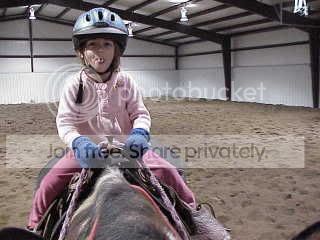
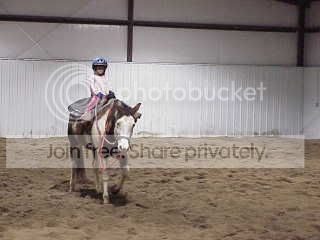
Don’t see many treeless saddles where I come from. If they have a "horn" it's not strong enough to hang a rope from. Nevermind trying to use a treeless to work cattle. Of course those things wouldn't be familiar to riders of the "English" disciplines.
Where is this childs weight "pin-pointed"?
[/QUOTE]Now look where this childs weight will be pin-pointed on the horses back:

Keep on, keeping on’
Jack
so...lancruiser...best go buy anouther pony then?.. ha ha or could you ride the new one and let your son ride pato? on a lead rein?
M
mu0ljk
Guest
Hey Mu0ljk, is that what they call a "family pony"
It's an enviromentally friendly people carrier! I don’t think you can assume that every horse is dangerous
No but you can assume that every horse is a prey animal and thus instinctive and thus unpredictable. No horse is 100% safe - outside facters determine this no matter the temperament of the horse.
That doesn't mean every horse is dangerous just that every horse is, well a horse!
Last edited by a moderator:
You might want to review your “emergency dismount” methods Kate. I believe most western riders are taught to dismount by balancing their weight on the riders hands and arms, removing both feet from the stirrups, before “propelling” both legs over the saddle using your arms to support your weight. I hope folks don’t “keep the weight on either side” if your talking about an emergency dismount since balance is necessary. Young riders should be taught to do this correctly and to practice it many times at different gaits.
Do whatever you like with your hands ! It's irrelevant. Any emergency dismount takes your leg over the BACK of the saddle. You can't do this if there's a small child blocking your path there. I doubt you can emergency dismount by swinging one leg up and over the horn, which as you say you need for roping. Even though you have no cows. The big advantage of regular dismount with the leg over the back, rather than the front of the saddle, is that at no time is your weight tipped back, neither is it to the side of the horse to which you do not intend to descend. Hence, you're always as safe as possible.
You can argue ad inifinitum about your weight distribution as you perform your ED, but at least we agree, every rider should be able to dismount quickly at all times. I therefore suggest that you might want to review YOUR emergency dismount method seeing as how you're locked in by a horn in front and a small child behind.
Last edited:
When carrying a passenger, either front or back, the option of dismounting doesn’t exist. If the rider comes off, the passenger most likely comes off, and the resulting wreck could be harmful to either of them. I hope Landcruiser has considered these types of problems with carrying and teaching the young rider.
Keep on, keepin on’
Jack
No but you can assume that every horse is a prey animal and thus instinctive and thus unpredictable. No horse is 100% safe - outside facters determine this no matter the temperament of the horse.
That doesn't mean every horse is dangerous just that every horse is, well a horse!
And ponies aren’t ? Yet no one gives a second thought to them, yes you could argue they are smaller but still a comparable enough risk not to differentiate from a horse.
That’s before we even get to how much more likely you are to be involved in a car accident etc, hardly anyone dies in a horse related incident in comparison to RTA’s yet no one makes a fuss of getting in a car or walking down the street.
Mechanical failure, driver error, deisel on the road, drunks etc those car's are more unreliable

The poor horse is victimised in this country.
Last edited:
M
mu0ljk
Guest
No not at all but talking about a lead rein pony (which is what I first mentioned) you are in control of the pony and you also have the option of simply pulling the child off of the pony - which yes I have done.
When carrying a passenger, either front or back, the option of dismounting doesn’t exist.
I know - sounds very dangerous, doesn't it !
Keep on, keepin on
Quite Literally
Last edited:
newrider.com